
The Pattern Shift Wheel: See What's Stuck and Know Where to Move
Most diagnostics show you the problem. This one shows you the way out.

Here’s what I’ve never heard a leader say after a culture assessment: “Now I know exactly what to do.”
They get the report and see the scores. They learn their organization has “low psychological safety” or “poor alignment” or “communication breakdowns.” Maybe there’s a benchmark comparison. Maybe there’s a recommended intervention at the end. And then they sit with a diagnosis and no direction.
This is the fundamental failure of most culture diagnostics. They’re good mirrors and terrible compasses. They show you where you are. They have almost nothing to say about where to go. The Pattern Shift Wheel was built to do both.
I’ve spent the past several months bringing this framework to leaders across sectors — most recently at United Nations Innovation Day and the Organizational Design Forum Annual Conference, where I’ve had the chance to test it with thousands of people navigating culture challenges in some of the most complex organizations in the world. What I keep seeing, every time: the moment people encounter this framework, they stop saying “we have a communication problem” and start saying “oh — that’s what’s actually happening.”
That shift from symptom to pattern is where the real work begins.
We’re Doing More. It’s Not Working.
Here’s the moment we’re in.
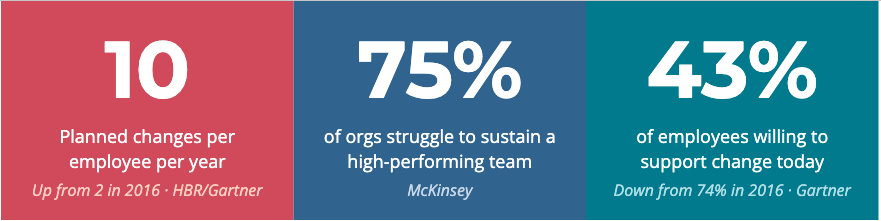
The average employee now navigates 10 planned organizational changes per year, up from just 2 in 2016. Three quarters of organizations still struggle to sustain a high-performing team. And only 43% of employees say they’re willing to support change today — in 2016, that number was 74%.
We’re doing more. It’s not working. And people have stopped believing in it.
The design flaw is specific: organizations try to build new ways of working while standing on top of old ways of being. Old patterns don’t disappear just because better approaches exist. They compete. They resurface under pressure. They reassert themselves when the work gets hard.
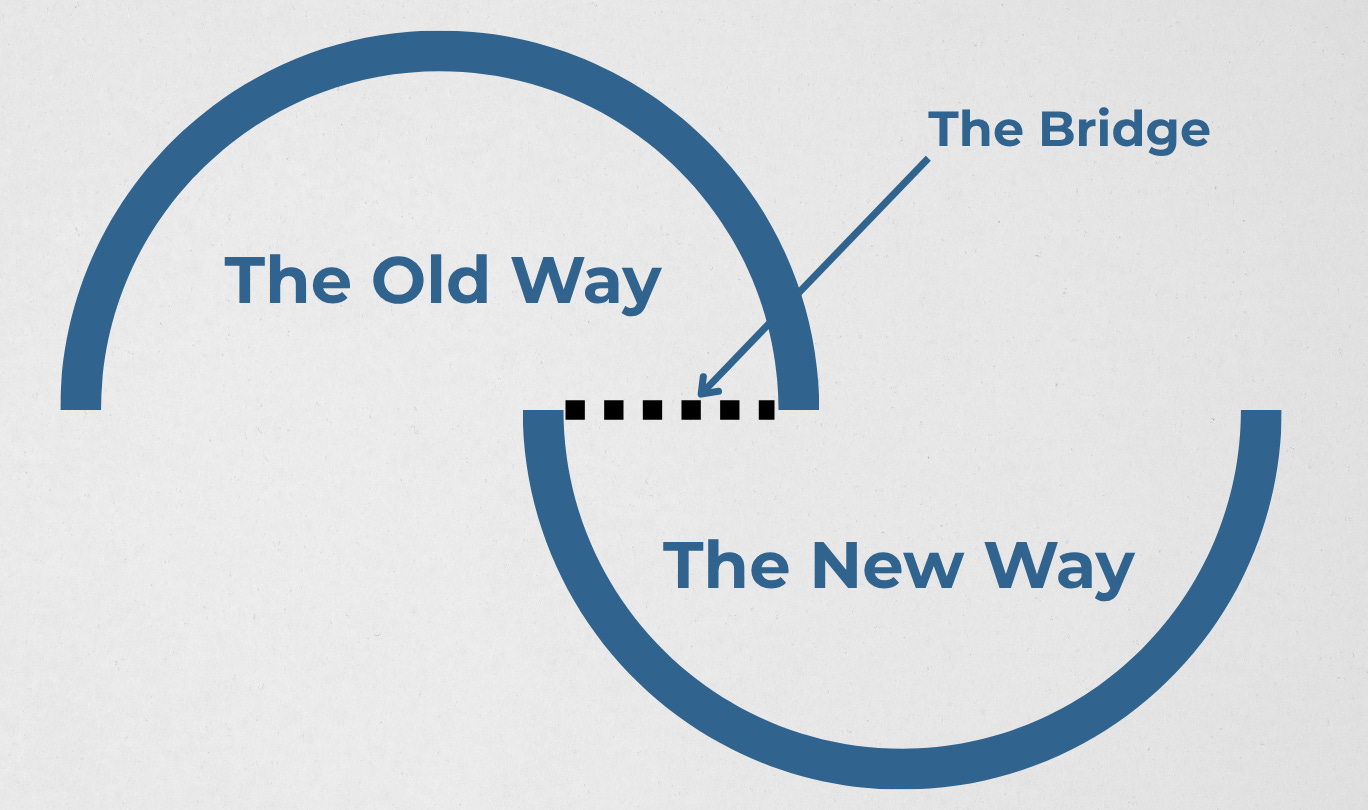
Most change efforts design the new way without building the bridge. Unlearning is the bridge: the deliberate work of loosening what you're holding so something new has room to take root. That's what the Pattern Shift Wheel is built for.
Why Most Diagnostic Frameworks Fall Short
Most leaders already know something is wrong. They can feel it. They just don’t have language for it, and they don’t have a clear direction to move. What they need isn’t another assessment that confirms their suspicions. What they need is a way to see the pattern clearly, understand what’s holding it in place, and know specifically what to move toward.
Some frameworks do point toward better states. Strengths-based approaches, appreciative inquiry, values mapping are real tools that real practitioners use well. But here’s the specific gap I keep running into: most diagnostics operate at the organizational level only. They show you what the culture is doing. They stop there.
That missing layer, the personal belief underneath the organizational pattern, is exactly what prevents the pattern from shifting.
A Gatekeeping pattern doesn’t persist just because of org chart structures. It persists because someone in power believes, often without knowing it, that sharing information means losing influence. A Hustle Culture doesn’t survive just because of workload. It survives because the leaders inside it have made urgency part of their identity.
You can redesign the org chart, launch a new initiative, or run another workshop and the pattern will reassert itself, because the belief underneath it hasn’t moved.
The language most frameworks use doesn’t help either. When patterns are labeled “dysfunctions” or “saboteurs,” it frames the problem as something bad happening to you: something to be eliminated or defeated. But the patterns running your organization aren’t villains. They’re inherited patterns that once made sense. Understanding that reason is what makes them possible to shift.
What the Pattern Shift Wheel Does Differently
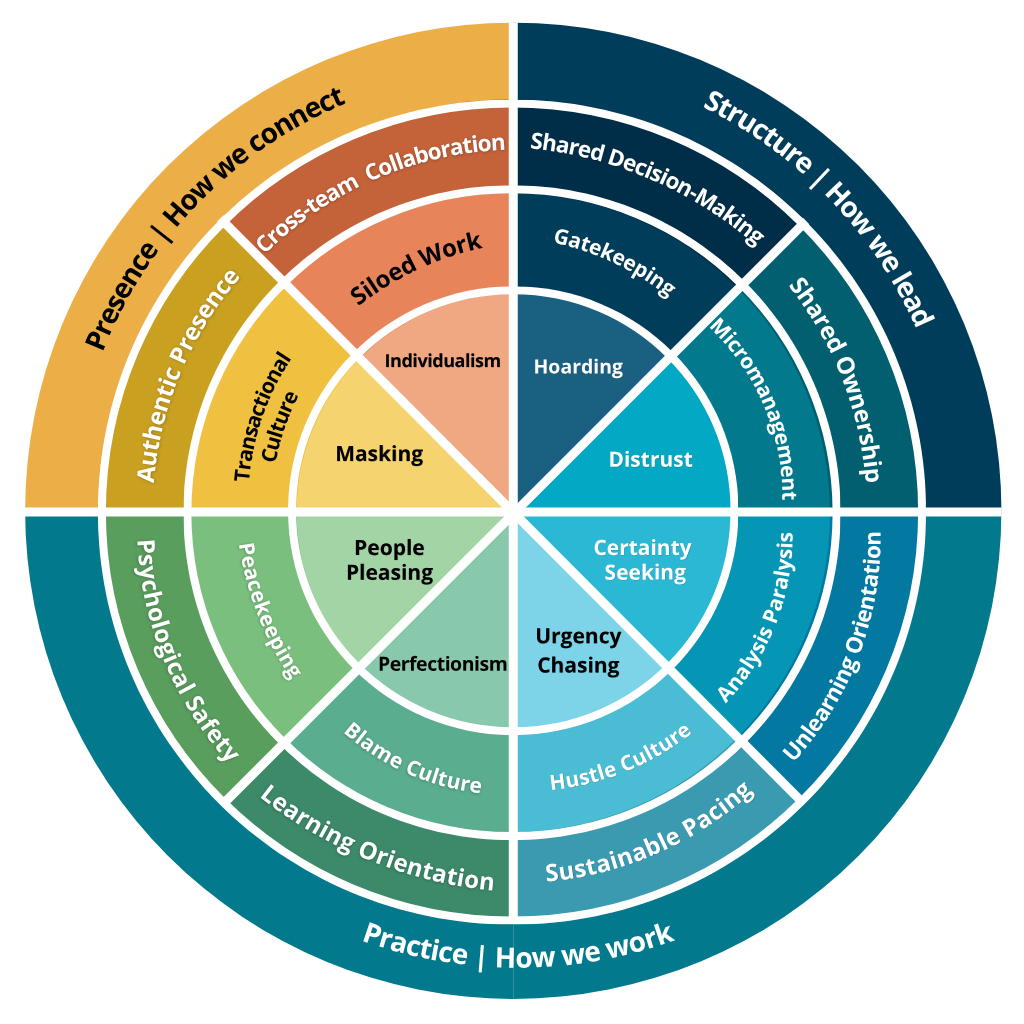
The Pattern Shift Wheel maps eight organizational patterns: inherited patterns organizations develop over time that now prevent them from thriving. But unlike most diagnostic frameworks, it doesn’t stop there.
The Wheel is organized into three domains that cover the full organizational experience:
Structure | How we lead — the patterns that show up in how power and authority flow through your organization.
Practice | How we work — the patterns that shape the day-to-day pace and norms of how work actually gets done.
Presence | How we connect — the patterns that govern how people relate to each other, how much of themselves they bring, and how information moves across the organization.
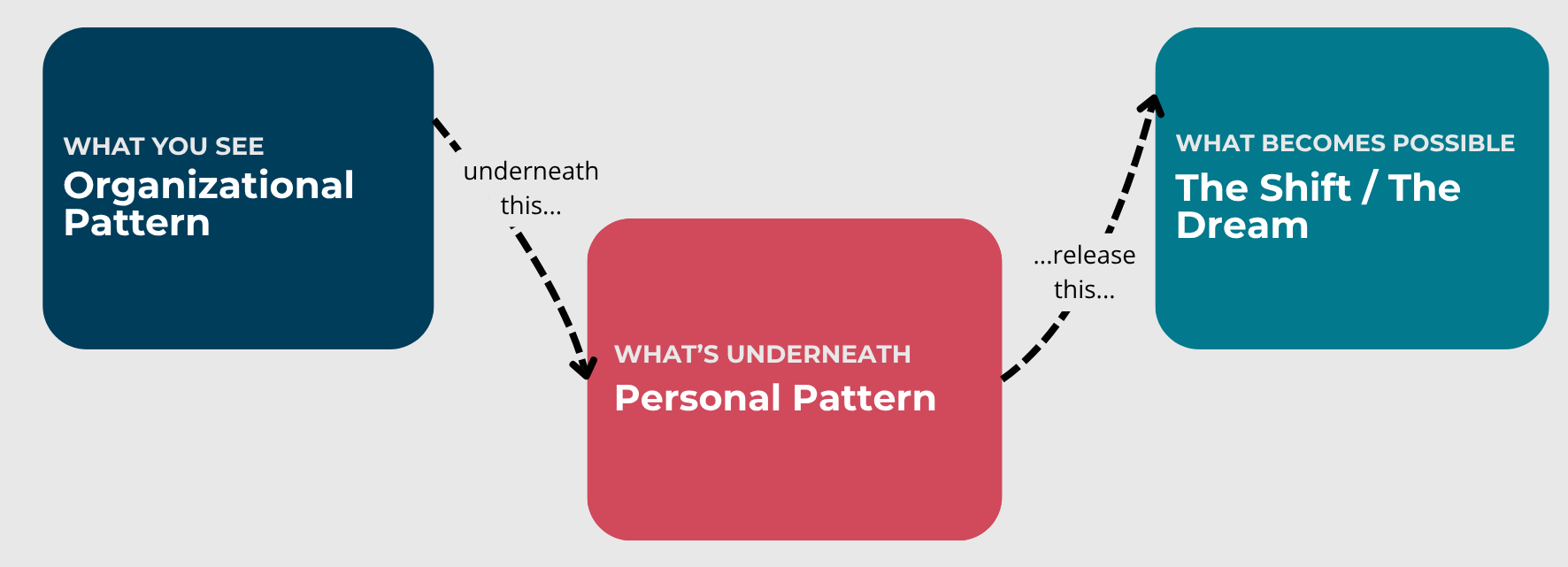
Within each domain, every pattern shows three things:
What you see — the organizational pattern, the visible behavior your organization keeps repeating, often without knowing why.
What’s underneath — the personal pattern, the belief someone carries that keeps the organizational pattern in place. This is the layer most diagnostics skip entirely.
What becomes possible — the shift, the specific cultural norm waiting on the other side when the belief changes and the behavior evolves.
That three-part structure is what makes the Wheel both a mirror and a compass. The first two layers help you see clearly. The third gives you direction.
The pattern is what you inherited. The shift is what you’re choosing.
The Eight Patterns
As you read through these, notice which one has the most energy for your organization right now: the pattern that keeps showing up even when you try to address it.
Structure | How We Lead
These two patterns live in the domain of leadership in how authority is held, shared, and exercised.
Gatekeeping is about controlling who has access to information, resources, or decisions. Underneath it: hoarding, a belief that sharing power or information means losing it. The shift is Shared Decision-Making, where authority is distributed and decisions are made at the level where the work happens, by the people closest to it.
Micromanagement shows up when leaders stay in the weeds of every detail, leaving little room for autonomy. The belief underneath is distrust, a conviction that control is the only way to ensure quality. The shift is Shared Ownership, where people have real accountability for outcomes rather than just tasks, and managers move from controlling how work gets done to being clear about what success looks like, then stepping back.
Practice | How We Work
These four patterns live in the domain of operations: the norms, habits, and rhythms that govern how work actually gets done.
Analysis Paralysis is what happens when decisions stall in endless review and the need for certainty stops forward motion. Underneath it is certainty seeking: a belief that moving before you have all the information is reckless. The shift is an Unlearning Orientation, where the organization treats not-knowing as a starting point rather than a stopping point, and learns from what happens instead of waiting for perfect conditions.
Hustle Culture normalizes and rewards overwork, making busyness a badge of honor. The belief underneath it is urgency chasing: where busyness becomes an identity, not just a workload. The shift is Sustainable Pacing, where work is designed around what people can sustain, rest is part of the work rather than a reward for finishing it, and teams learn to distinguish what’s genuinely urgent from what just feels that way.
Blame Culture turns every failure into a question of fault rather than learning. Underneath it is perfectionism, where mistakes feel like verdicts rather than data. The shift is a Learning Orientation, where accountability stops being about punishment and starts being about understanding, and mistakes become information.
Peacekeeping avoids hard conversations to maintain surface harmony, suppressing conflict rather than resolving it. The belief underneath is people pleasing, a conviction that keeping the peace is safer than telling the truth. The shift is Psychological Safety, where people say the true thing rather than the comfortable thing, and disagreement is welcomed because surfacing tension early is less costly than letting it fester.
Presence | How We Connect
These two patterns live in the domain of relationships — how people show up with each other, and how information and trust move across the organization.
Transactional Culture keeps relationships purely task-based, treating people as means to an end rather than whole humans. Underneath it is masking: performing professionalism instead of bringing your full self, because authenticity feels too risky. The shift is Authentic Presence, where relationships have texture, interactions aren’t purely task-focused, and there’s genuine investment in the humans doing the work.
Siloed Work keeps teams operating in isolation, with information failing to flow across the organization. Underneath it is individualism, where knowledge becomes currency hoarded rather than shared, because your value feels tied to what only you can do. The shift is Cross-team Collaboration, where teams share context, resources, and credit across boundaries, and contributing to something bigger than your department becomes not just possible but natural.
📥 Download the Pattern Shift Wheel Reference Card: all 8 patterns, beliefs, and shifts in one place. Bring it to your next leadership conversation.
The Layer Most Diagnostics Skip
The personal pattern layer is what makes the Wheel different from any other organizational diagnostic I’ve seen. Organizational patterns don’t exist in a vacuum. They’re held in place by the beliefs of the individuals who lead and operate within them.
You cannot shift an organizational pattern without also addressing the personal belief underneath it. Beliefs can change. Not quickly, and not without effort, but they are not fixed. When the belief shifts, the pattern begins to loosen.
This is also why the Wheel doesn’t use deficit language. The personal patterns on the Wheel: hoarding, distrust, certainty seeking, urgency chasing, perfectionism, people pleasing, masking, individualism aren’t character flaws. They’re learned patterns. They developed in contexts where they made sense, that kept people safe, kept organizations functioning, kept things moving in conditions that may no longer exist.
Because they were learned, they can be unlearned. The question is:
What are we each protecting that’s actually holding the team back?
Two Futures
Every organization carrying these patterns is moving toward one of two futures.
One future is the cost of inaction, what we call apathy. Not dramatic collapse, but a slow drift: the accumulated weight of patterns left unexamined, beliefs never questioned, inherited ways of working that quietly compete with everything you’re trying to build. It is the slow, silent hum that compounds over time.
The other future is what becomes possible when you choose action. When you see the pattern clearly, name what’s underneath it, and deliberately move toward the shift. That’s what the Wheel is for.
I’m a person of action, and this framework is built for people who are too. The Wheel gives you the mirror and the compass. What you do with them is the work.
Next week, we’ll tell the full story of what apathy costs: the predictable outcomes that emerge when these patterns go unaddressed, and how they compound into the culture problems that are hardest to solve.
You have the map. Use it.
The Destination: Essential Loveable Culture™
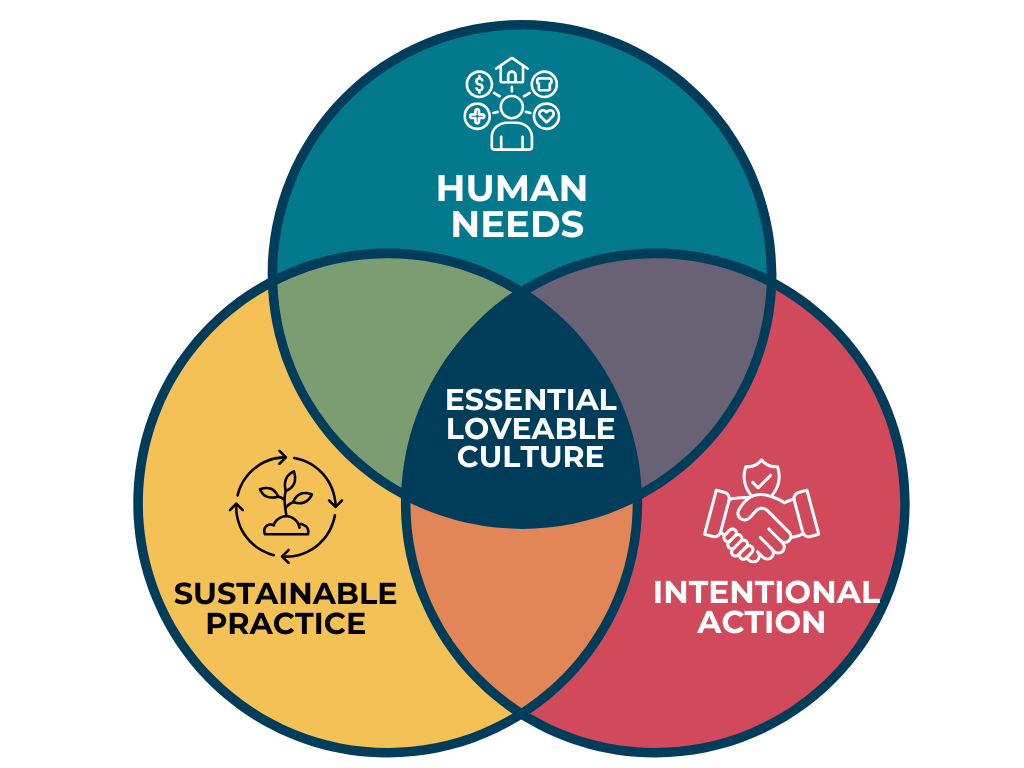
Each shift on the Wheel points toward the same destination. I call it an Essential Loveable Culture™. The name is intentional.
Essential means the non-negotiables are in place: safety, clarity, fairness, and belonging. The culture doesn’t ask people to sacrifice their humanity to do their work.
Loveable means people are genuinely glad that they work where they are. The relationships have texture. The work has meaning. Leaders are present, not just functional. It’s the difference between a culture you’d describe as “fine” and one you’d actually recommend.
Culture means it’s lived, not just stated. It is the actual experience of working here: what gets rewarded, what gets ignored, what people say when no one’s watching.
An Essential Loveable Culture™ has all three working together simultaneously: human needs are actually being met, leaders are choosing these practices intentionally rather than just talking about them, and the work is sustainable without burning people out. A few address two. Where they overlap is where culture is at its best. It’s a specific, achievable state, and every shift named on the Wheel is a concrete move toward it.
How to Use the Wheel
The Wheel is a diagnostic tool, but it’s designed to be used actively, not just read. Start by identifying which domain feels most alive right now: Structure, Practice, or Presence. Where is the friction most visible? Where are leaders most frequently frustrated?
Then find the specific pattern with the most energy: the one that keeps showing up even when you try to address it. Don’t try to solve everything at once. The most effective culture work starts with the highest-leverage pattern and works outward from there.
Then look at the personal pattern underneath it. This is the harder question. Who in your organization carries that belief? Is it distributed across leadership? Is it concentrated in a few key roles? And more uncomfortably: do you carry it yourself?
Finally, look at the shift. This is the compass reading. Use it as a design brief: what would need to be true for that shift to become your team or organization’s your new normal?
That’s where culture work begins: not with a program or a policy, but with a clear-eyed look at what you’re doing, why you’re doing it, and what becomes possible when you choose something different.
What’s Next
The Pattern Shift Wheel is the diagnostic foundation of everything we do at the Culture Shift Studio. But a diagnosis is only useful if you understand what’s driving the patterns in the first place and what it costs when they go unaddressed.
Next week: the eight Culture Risks™. These are the predictable outcomes of apathy: the specific, compounding consequences that emerge when organizations leave these patterns running unchecked. They’re the nightmare scenarios you can still avoid. Understanding them is what turns the Wheel from a diagnostic into a prevention tool.
A question to sit with:
Which of the eight patterns do you recognize most in your organization right now? And what do you think is underneath it?
Drop it in the comments. These conversations are where the real learning happens.
Here’s to building cultures worthy of the people in them,
Amy
P.S. If this framework resonated and you want to bring it to your team, there are two ways to start.
The Map is a 60-minute session where I walk your team through the full Wheel, you identify the pattern with the most energy right now, and you leave with language and direction. It’s the same session I recently delivered to leaders at the United Nations. Investment: $500, applied as a credit if you move forward to a deeper engagement.
The Deep Dive is a 90-minute deeper exploration that adds the Culture Risks™ and starts mapping what’s driving the patterns in your specific organization. You leave with a written summary of what surfaced and a clearer sense of where to focus. I just delivered this session at the Organizational Design Forum. Investment: $1,500.
Either way, start with a free 30-minute conversation and we’ll figure out which is the right fit.
Not ready to book yet? Download the free Pattern Shift Wheel Reference Card — all 8 patterns, the beliefs underneath them, and the shifts on the other side.
I love this culture pattern wheel and how you so elegantly connect the individual belief to the organizational manifestation.
This is very exciting work, Amy! As an external processor, I really appreciate how you break down the pattern shift domains into structure, practice, and presence AND make visible the very nuanced personal layer! What an embodied practice of change!